Buzzards and red kites are such a familiar sight over Reaside that today's empty sky feels almost strange. The likely explanation is the weather: after a long, hot summer, it finally broke last night with thunder and lightning, and this morning the skies are heavy and grey, bringing our first proper rain since June.
The buzzards nest in the trees just across the river from the farmhouse, and on warm, sunny days they love nothing more than riding the thermals. We suspect the river running alongside the wooded bank creates its own currents of warm air, perfect for effortless soaring. It was a real surprise the first time we saw a buzzard and a red kite sharing the same stretch of sky. Apparently they will fight over food when it's scarce, though we've never actually seen it happen ourselves.
We're hoping to see even more of these fantastic apex predators in the years ahead, as our populations of wood mice, voles and shrews grow. Earlier this year we converted around seven acres of grassland into more wildlife-friendly habitat through extensive tree planting, and the Shropshire Mammal Group has been helping us establish a baseline population count using camera traps. Buzzards also have a taste for pigeon, and we have no shortage of those either. Out walking, we often stumble across the aftermath: the remains of a pigeon or pheasant, feathers scattered across the grass.
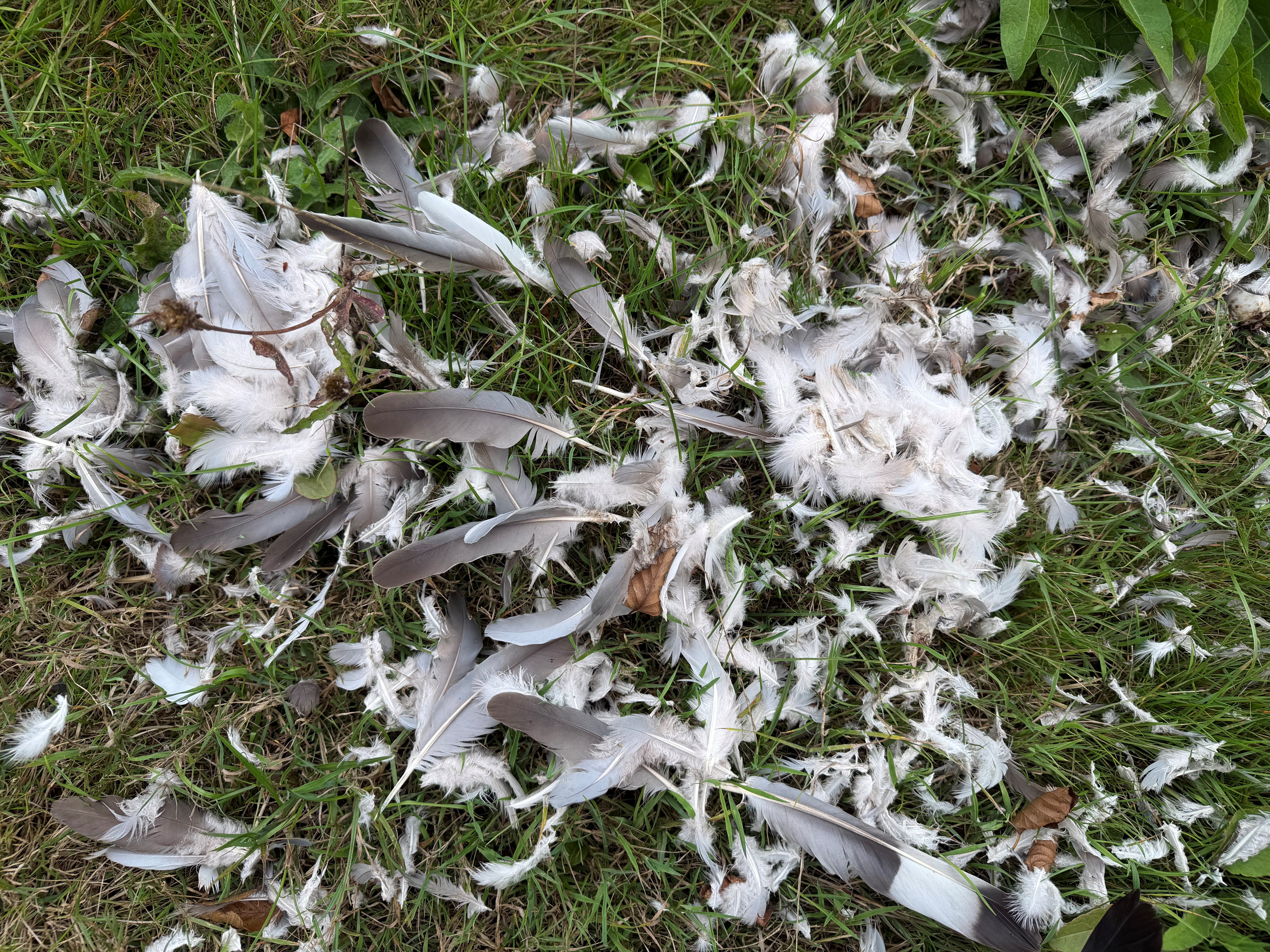
It turns out you can tell a lot from a pile of feathers. Buzzards pluck their prey carefully, leaving the quills clean and intact, while a fox will chew through the whole bird and leave a much messier scene behind.
Rooks and crows seem to have it in for the buzzards, constantly mobbing and harassing them mid-air, though for some reason they leave the red kites largely alone. The rooks have numbers on their side: as soon as one tires, another is ready to take over.
If you're not sure which is which, listen first. Buzzards give themselves away with a distinctive, mewing call, often heard long before they come into view. Red kites are slightly larger and sleeker, with a telltale forked tail, and their flight is far more acrobatic, all sharp turns and sudden dives, compared to the buzzard's serene, effortless glide.
Both birds love haymaking season, when the cutting disturbs voles, mice and shrews and sends them scurrying for cover. Red kites in particular will swoop in remarkably close to the tractor, and it can be quite the distraction watching their aerobatics overhead. So far, though, we haven't driven into a fence yet.